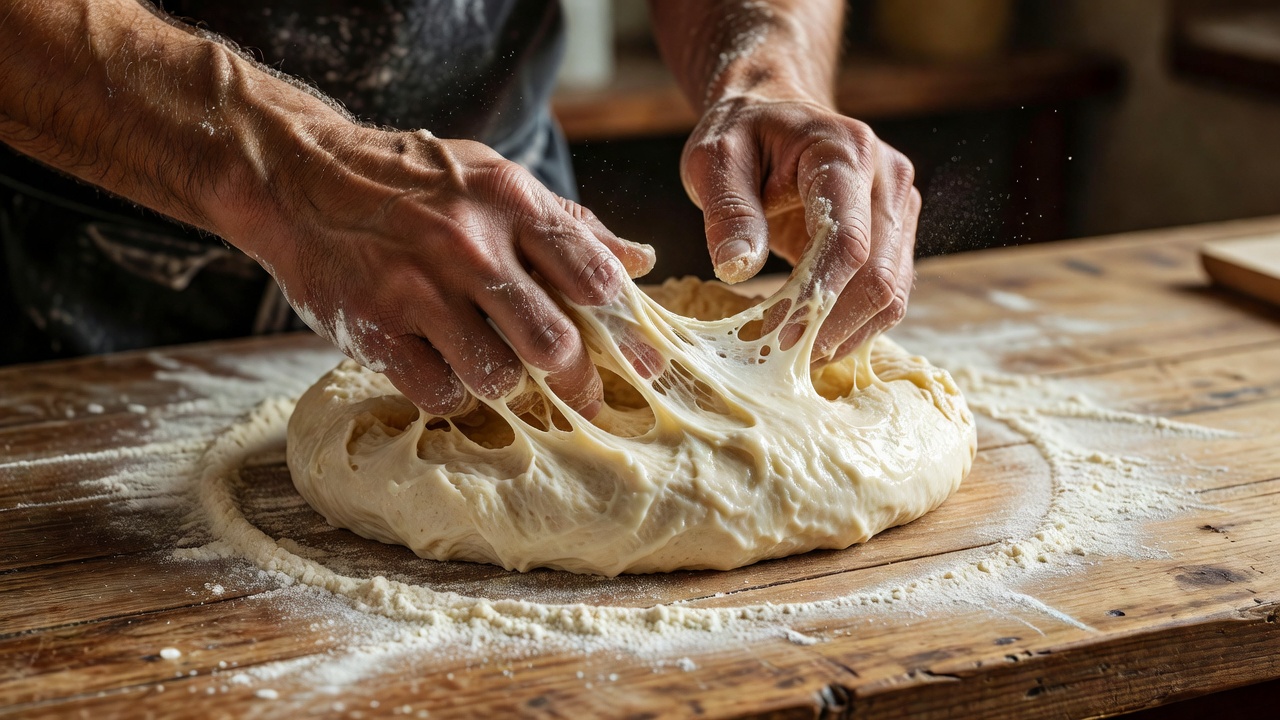
If you've spent any time reading pizza recipes online, you've likely encountered percentages: "65% hydration," "72% hydration." To the uninitiated, this sounds like laboratory science rather than cooking. But understanding hydration is the single biggest step to improving your pizza crust.
Baker's Math Explained
In baking, all ingredient weights are expressed as a percentage of the total flour weight. Flour is ALWAYS 100%.
If a recipe calls for 1000 grams of flour and 650 grams of water, the dough is 65% hydration (650 / 1000 = 0.65).
If it calls for 20 grams of salt, the salt is 2% (20 / 1000 = 0.02).
Why Hydration Matters
The amount of water in your dough drastically alters both how it handles and how it bakes:
- Low Hydration (55% - 60%): Very stiff dough. Easy to handle, shape, and launch into the oven. Produces a denser, chewier crust. Typical of standard New York style or some traditional Neapolitan recipes cooked at ultra-high heat.
- Medium Hydration (60% - 65%): The sweet spot for most home bakers. Balances workability with a lighter, airier crust and better oven spring.
- High Hydration (70%+): Very sticky and difficult to handle. Requires techniques like "stretch and fold" rather than traditional kneading. However, it produces a dramatically airy, open crumb structure (lots of big bubbles) and a lighter crust. Common in Pan pizzas, Detroit style, and artisan sourdough.
Flour Type Changes Everything
You cannot blindly increase hydration without considering your flour. American Bread Flour has high protein (12-14%) and absorbs water easily, holding up well at 70% hydration. Italian 00 Flour is milled very finely and typically absorbs less water; pushing it past 65% can result in a soupy mess.